
2026 Integrated Resource Plan
A Responsible Plan for Reliable, Affordable Energy
Page summary
Tucson Electric Power outlines a 15-year plan to maintain reliable, affordable energy while adding solar, battery storage and natural gas resources, transitioning away from coal and reducing carbon emissions.
Tucson Electric Power's 2026 Integrated Resource Plan (IRP) outlines how we expect to meet our customers' energy needs over the next 15 years while maintaining reliable service, managing costs responsibly, and making continued progress toward a cleaner energy future. The plan reflects a rapidly changing energy landscape that includes growing energy demand, new economic development opportunities, evolving government policies, and continued advances in energy technology.
After evaluating seven portfolios representing different resource, growth, and policy scenarios, TEP selected a technology-neutral portfolio that provides the best balance of reliability and affordability with meaningful environmental benefits.
Our Preferred Portfolio
TEP's preferred portfolio is the Least-Cost, Technology Neutral portfolio, which emerged as the lowest-cost option for meeting customers' future energy needs while maintaining system reliability.
The portfolio includes:
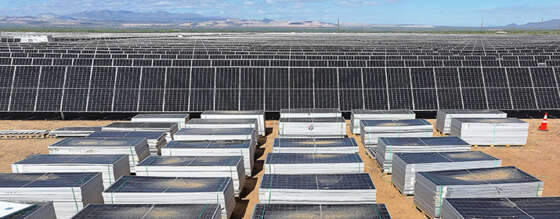
- 680 megawatts (MW) of new solar generation
- 680 MW of battery energy storage
- 300 MW of new natural gas combined-cycle generation
- 730 MW of readily available capacity preserved through the conversion of TEP’s Springerville Generating Station (SGS) to operate on natural gas rather than coal
- A complete transition away from coal-fired generation by 2031
Among the portfolios evaluated under the same load-growth assumptions, the preferred portfolio is projected to reduce customer costs by approximately $150 million to $260 million compared with other resource portfolios considered.
Balancing Reliability, Affordability and Sustainability
Every resource planning decision must balance three core priorities: reliability, affordability and sustainability. TEP's preferred portfolio supports all three.
Reliability
Customers depend on reliable electric service every hour of every day. To ensure reliability, the preferred portfolio includes a diverse mix of resource additions – including solar, battery storage, and natural gas resources – rather than relying on any single technology. Planning studies consistently show that dispatchable resources continue to play an important role in maintaining reliability during periods of low or no renewable output, extended weather events and other challenging conditions.
The portfolio was developed using updated reliability analyses, including an 18 percent planning reserve margin and extensive resource adequacy modeling designed to ensure sufficient energy and capacity resources are available under a wide range of operating conditions.
Affordability
Customer affordability remains a critical consideration in TEP's planning decisions. The preferred portfolio produced the lowest overall cost while meeting reliability requirements and delivering significant environmental benefits. Alternative portfolios that required additional clean-energy resources or emerging technologies increased long-term costs.
Sustainability
The preferred portfolio continues TEP's long-term effort to reduce emissions while maintaining reliable and affordable service. Even though the portfolio was developed without environmental mandates, it still includes substantial additions of solar generation and battery storage while completing TEP's transition away from coal-fired generation.
By 2041, the portfolio is expected to:
- Reduce carbon dioxide emissions by approximately 53 percent compared with the 2019 baseline
- Reduce the rate of sulfur dioxide and nitrogen oxide emissions significantly
- Phase out coal-fired generation
Completing the Transition Away from Coal
A major milestone reflected in the 2026 IRP is TEP's planned transition away from coal-fired generation.
Under the plan:
- SGS Units 1 and 2 will be converted from coal to natural gas by 2030.
- TEP plans to exit its ownership share of Four Corners Power Plant in 2031.
- Together, these actions will end TEP's reliance on coal-fired generation.
The SGS conversion preserves 730 MW of dispatchable capacity while reducing emissions, mitigating future environmental compliance risks, and avoiding significantly higher replacement costs associated with other alternatives. The conversion is expected to reduce the carbon emissions rate from those units by about 40 percent.
Planning for Growth
Southern Arizona continues to attract investment from advanced manufacturing, aerospace, mining, biosciences and other industries, such as data centers and other energy-intensive businesses.
A foundational principle of TEP’s approach to growth is that it must protect existing customers. New customers and new load should appropriately support the generation, transmission and infrastructure investments required to serve them, without shifting costs or risks to existing customers.
The preferred portfolio provides a strong foundation for future growth while preserving flexibility to respond as economic conditions and customer needs evolve.
Progress Since the 2023 IRP
Since filing its previous IRP, TEP has continued to add renewable energy and storage resources that support reliability, affordability and environmental goals.
Projects completed or announced since the 2023 plan include:
- Babacomari Solar
- Roadrunner Reserve Battery Energy Storage Systems I and II
- Wilmot Energy Center II
- Winchester Solar and Storage Project
Collectively, resources entering service since the 2023 IRP add approximately:
- 340 MW of solar generation
- 580 MW / 2,320 MWh of energy storage capacity
These investments strengthen reliability, increase operational flexibility, and enable greater use of lower-cost renewable energy.
Integrated resource planning is an ongoing process. TEP updates its Integrated Resource Plan every three years to reflect changing customer needs, energy technologies, market conditions and stakeholder input.
Frequently Asked Questions
Resource Planning Advisory Council
As part of the 2026 IRP process, TEP engaged a Resource Planning Advisory Council that provided a forum for in-depth discussions with community stakeholders. Members included representatives for residential and business customers, local governments, environmental advocates, renewable energy industry representatives, consumer advocates, supporters of low-income customers, and others.
Council members reviewed assumptions, discussed portfolio alternatives, provided feedback on planning outcomes, and helped shape the discussions that informed the final plan. Their input helped ensure that the 2026 IRP reflects community perspectives as well as utility planning requirements.
Learn more about the Resource Planning Advisory Council
Previous IRPs