
When it comes to energy, Southern Arizona shines. Our abundant sunshine makes solar energy a great resource, particularly when paired with battery energy storage systems that improve its availability.
Tucson Electric Power is investing in a significant expansion of our solar plus storage systems. In fact, from 2025-2027, the only energy resources we’re adding to our local grid are 760 megawatts (MW) of solar and storage.
Such systems work well in combination with the other resources on our local energy grid. But solar plus storage systems are not yet a viable alternative to conventional generating resources that provide power around the clock, whatever the weather. That’s why TEP will need to add both clean energy systems and conventional resources in coming years to serve our community’s increasing energy needs.
The primary issue is availability. The sun isn’t always shining, even in Tucson, and utility-scale batteries typically provide 2- to 4-hours of storage. While this capability can add real value to a diverse portfolio, it cannot replace more reliable resources. Knocking down the peak energy usage and applying a mixed portfolio behaves much the same as traditional energy efficiency plans where we shift energy production and energy usage to complement lower costs and offset peak prices.
It’s frustrating when people claim solar plus storage is cheaper than natural gas generation without acknowledging that their capabilities are so different. It’s like comparing a flashlight to a streetlight. Both are useful, but only one can keep a neighborhood lit all night long.
Providing greater reliability from solar plus storage requires a lot more batteries – and money.
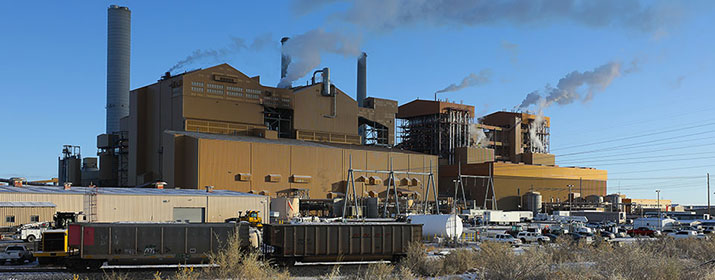
Before we announced plans to convert Units 1 and 2 at our coal-fired Springerville Generating Station (SGS) to run on natural gas, we considered replacing those units with 750 MW of either combined-cycle natural gas generation or solar plus storage. While the new gas plant would cost approximately $1.5 billion, it would cost three times as much – $4.5 billion – to get comparable performance out of solar and batteries.
The SGS conversion, by the way, will cost less than $200 million – proof that TEP prioritizes affordability over potential profits. We know some critics will never acknowledge it, but we are committed to keeping our service as affordable as possible while making cost-effective progress toward a cleaner energy future.
TEP’s request for new rates reflects our dual focus on affordability and sustainability. We’ve asked for a 14 percent increase late next year to recover $1.7 billion in local grid upgrades that support reliability, including our largest recent investment: $350 million for the first 200-MW of our growing Roadrunner Reserve battery energy storage system.
The system helps us serve peak energy needs with affordable solar power generated earlier in the day. In this way, it will support energy cost savings and carbon emission reductions over time. The system was already helpful in providing reliable, low-cost energy when TEP hit a record peak usage in early August. Meanwhile, the rate increase needed to cover the system’s cost and our other investments would be less than the level of inflation since 2021, the year used as the basis for our current rates.
Balance is critical to providing reliable power at an affordable price. While solar and storage will play an increasingly prominent role in our energy mix, it must be part of a balanced portfolio that provides both affordability and reliability for our community.
Dylan Bearce is Senior Director of Energy Resources for Tucson Electric Power