A new solar and storage system is producing clean energy during the day and storing it for use later when customers need it most.
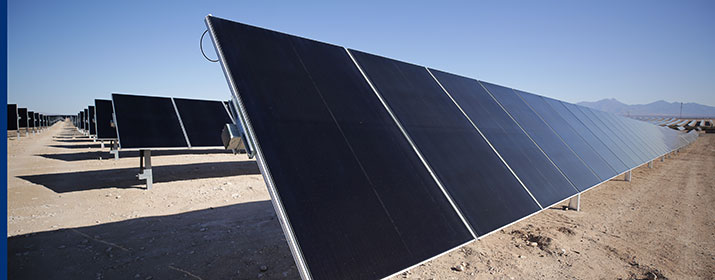
TEP’s new Wilmot Energy Center II features a 100-megawatt (MW) solar array and a 100 MW battery energy storage system (BESS) on about 1,000 acres southeast of Tucson. Wilmot II will help TEP reduce reliance on fossil fuels as we work toward an aspirational goal of achieving net zero carbon emissions by 2050.
“We’re bringing another new clean energy resource online just in time for summer to help meet our customers’ peak energy needs,” said Sean Bowen, Manager of Renewable Development.
The solar system features about 314,000 photovoltaic panels that can track the sun’s movement throughout the day to produce more energy than traditional stationary solar panels. The system will charge the BESS in the late morning and early afternoon when solar energy is abundant and energy use has not yet peaked. As customers’ energy needs increase in the late afternoon and early evening, TEP can deploy the reserved energy to satisfy customers’ energy needs.
Wilmot II’s BESS can store 400 megawatt-hours (MWh) – enough energy to power about 14,600 homes for four hours. The system uses lithium iron phosphate batteries, which are known for their longer life and safer operation than other types of storage systems.
Wilmot II will build on the success of the original Wilmot Energy Center, which includes a 100 MW solar array and a 30 MW battery energy storage system. Both systems are owned and operated by subsidiaries of NextEra Energy Resources.
Wilmot II is the second largest storage resource on our local energy grid and our largest single solar‑plus‑storage project.
The project was built pursuant to an all-source request for proposals issued in 2022. This process identifies the most cost-effective projects among competing proposals that satisfy certain energy requirements. Projects selected through this process align with TEP’s long-term integrated resource plans, which describe how each company plans to meet customers’ increasing energy needs over the next 15 years while maintaining affordable service.
Learn more about TEP’s clean energy resources and about how much energy they’re producing for our community right now.