

UNS Energy Corporation is voluntarily providing this information for customers, investors and others who want to learn more about our business. Guided by our Officer team, the company maintains a holistic focus on responsible business practices that enables us to lead the way in clean and reliable energy and build prosperity, growth and resilience in our communities. As a part of a group of companies owned by Fortis Inc., a leader in the North American regulated electric and gas utility industry, UNS Energy also contributes to Fortis’ commitment as a Task Force for Climate-Related Financial Disclosures supporter.
Below, you will learn more about how our company’s values are driving positive change for generations to come.
About Our Company
Our values define how we work and who we are
Our journey is rooted in our vision, to be an exceptional energy provider that positively impacts the lives of our employees, customers and communities. Our values represent our fundamental beliefs, guiding our behaviors and supporting our long-term strategic ambitions.
In our commitment to drive sustainability, we:
- work to protect and preserve our environment
- promote and support prosperity, growth and wellbeing in our communities
- work efficiently, use resources responsibly and partner with customers to care for our planet.
We drive sustainability through our investments in grid technology, through the infrastructure we’re developing for electric vehicles, and through our strategic philanthropic investments and community support.
Our quantitative metrics are one way to help understand our company’s focus on social, environmental and governance intentions and actions.
By the Numbers

Environmental
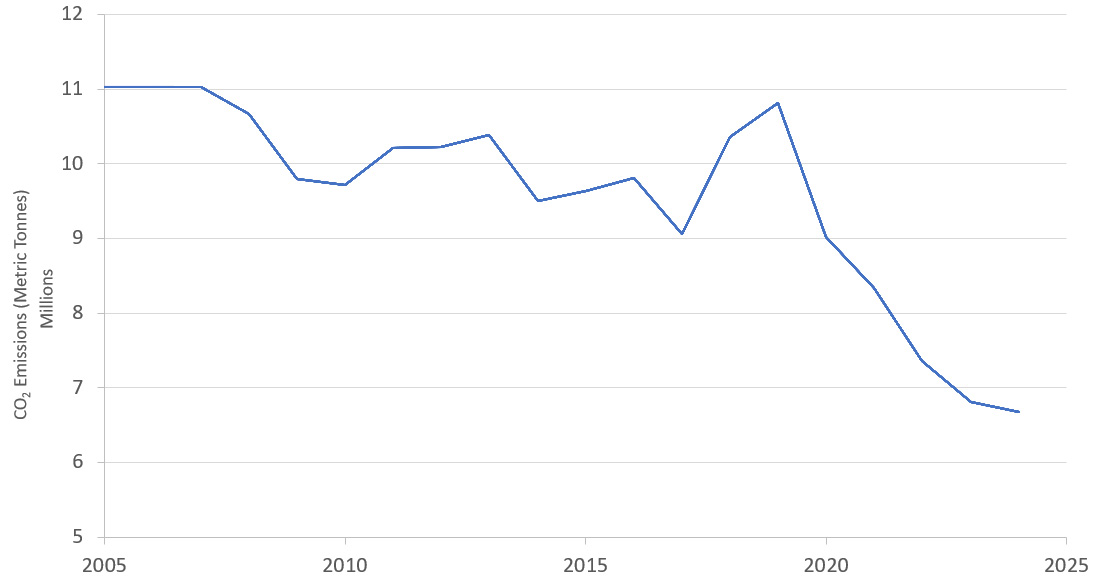
Energy resource diversification, carbon emissions reductions and climate resiliency efforts are major components of UNS Energy's sustainability strategy.
The integrated resource plans (IRPs) for Tucson Electric Power (TEP) and UniSource Energy Service (UNSE) demonstrate how both companies are planning to build cleaner, more flexible resource portfolios.
Social
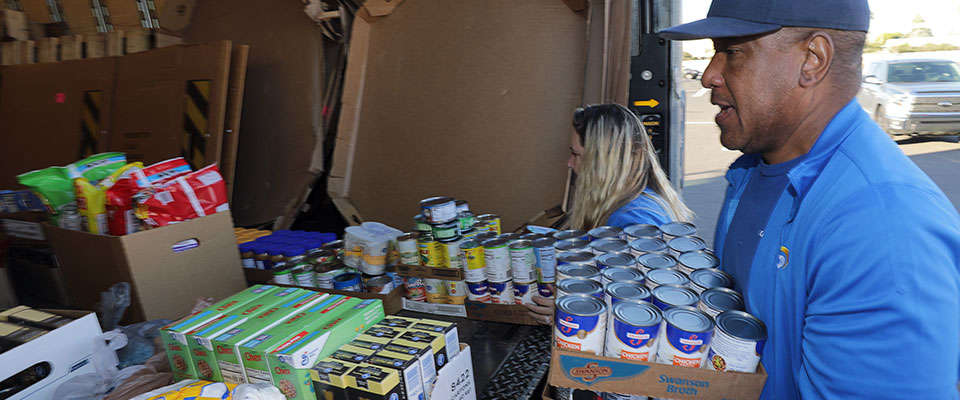
Our dedication to service extends beyond providing safe, reliable energy services. We are committed to improving the quality of life in the communities we serve.
TEP and UniSource are dedicated to being a good neighbor and are providing assistance to our most vulnerable residents, helping to address complex issues such as homelessness and poverty, social inequities, hunger, domestic violence and other areas of need.
By working to address these needs, we’re giving individuals and families new opportunities for a better life, and supporting our business communities in efforts to create stronger, healthier and more vibrant communities.
Governance
Our commitment to sustainable growth and responsible governance enhances the value the company provides to customers, the community and other stakeholders.
TEP's and UniSource’s commitment to sustainable and responsible business guides the decisions of the board of directors, executives, managers and supervisors at all levels and in all areas of the company.
Our Board of Directors draws on the expertise and strong business acumen of trusted business leaders with experience from the fields of utilities, science, construction, healthcare and other disciplines. Its members value integrity, accountability, collaboration, sustainability and the creation of opportunities for the company and all of its employees.
The Board of Directors also established an Environmental, Safety and Security (ESS) Committee. The ESS Committee advises and assists with Board oversight of environmental matters, sustainability objectives and the safety and security of employees, customers and members of the public.
Several Officers from the management team sit on our Sustainability Officer Strategy Team. The Sustainability Officer Strategy Team is a cross-functional team led by executives and supported by a diverse group of directors, managers and subject matter experts. The Sustainability Officer Strategy Team is responsible for holding sustainability central to our business strategy.
Several Officers from the management team sit on our Sustainability Officer Strategy Team. The Sustainability Officer Strategy Team is responsible for holding sustainability central to our business strategy.
Our management teams for TEP and UniSource value innovation and performance excellence, and promote an unwavering culture of compliance, safety and a commitment to customers. With strong leadership skills and thorough knowledge of company operations, our leaders focus on improving efficiencies and generating value for a diverse set of stakeholders. They do all of this while modeling and promoting a positive, values-driven philosophy.
Championed by the management team, we maintain Employees Creating Opportunities for Sustainability (ECOS), an employee-led ‘green team’ that identifies and implements our company's sustainability initiatives and raises sustainability awareness among coworkers and in the community. The group has already revamped our recycling program, donated reusable water bottles to schools, hosted sustainability ‘lunch and learn’ meetings and other initiatives since its inception in 2020.
Over the last six years, ECOS has volunteered over 640 hours, positively impacting 15 local organizations around Tucson. Some examples include installing solar-paneled wildlife cameras in the Tortolita Preserve, building raised garden beds at Keeling Community Garden, removing invasive species from the Tohono Chul gardens and supporting the City of Tucson’s biannual Tucson Zero Waste collection event.
We are committed to improving the quality of life in our communities.
TEP and UniSource are expanding our renewable energy portfolios, exploring new customer options and providing pricing plans that address customers’ evolving energy needs. As Arizona continues to grow and change, we will continue providing reliable service to customers while investing in new, innovative technologies and cleaner energy resources.
Forward-Looking Information
This report relating to UNS Energy Corporation and its subsidiaries Tucson Electric Power Company (“TEP”), UniSource Energy Services, Inc. UNS Electric, Inc. and UNS Gas, Inc. (collectively “we”, “us” or “our”), contains forward-looking statements as defined by the Private Securities Litigation Reform Act of 1995. We are including the following cautionary statements to make applicable and take advantage of the safe harbor provisions of the Private Securities Litigation Reform Act of 1995 for any forward-looking statements made by us in this report. Forward-looking statements include statements concerning plans, objectives, goals, strategies, future events, future economic conditions, future operational or financial performance and underlying assumptions, and other statements that are not statements of historical facts. Forward-looking statements may be identified by the use of words or phrases that include "anticipates," "believes," "estimates," "expects," "intends," "continues," "assumes," "aspires," "may," "plans," "predicts," "projects," "would," "could," "forecast," "target," "goal," "potential," "commitment," "strategy," "will," and similar expressions. From time to time, we may publish or otherwise make available forward-looking statements of this nature. All such forward-looking statements, whether written or oral, and whether made by or on behalf of us, are expressly qualified by these cautionary statements and any other cautionary statements which may accompany such forward-looking statements. In addition, we disclaim any obligation to update any forward-looking statements to reflect events or circumstances after the date of this report, except as may otherwise be required by the federal securities laws.
Forward-looking statements involve risks and uncertainties which could cause actual results or outcomes to differ materially from those expressed herein. We express our estimates, expectations, beliefs, aspirations, and projections in good faith and believe them to have a reasonable basis. However, we make no assurances that management’s estimates, expectations, beliefs, aspirations, or projections will be achieved or accomplished. We have identified the following important factors that could cause actual results to differ materially from those discussed in our forward-looking statements. These may be in addition to other factors and matters discussed in: Part I, Item 1A. Risk Factors of TEP’s 2025 Annual Report on Form 10-K (“Annual Report”); Part II, Item 1A. Risk Factors of TEP’s Quarterly Reports on Form 10-Q (“Quarterly 10-Q Reports”); Part I, Item 2. Management’s Discussion and Analysis of Financial Condition and Results of Operations of TEP’s Annual Report and Quarterly 10-Q Reports; our other filings with the Securities and Exchange Commission; and other parts of this report. These factors include: voter initiatives and federal, state, and local regulatory and legislative decisions and actions, including changes in tax, tariff, and energy policies (including, among other things, data center energy use, efficiency standards, and sources of power), as they may be affected by the policies and priorities of governmental officials at the federal, state, and local levels; the outcome of the November 2026 general election vote on TEP’s new franchise agreement with the City of Tucson; any change in the structure of utility service in Arizona resulting from the Arizona Corporation Commission's (“ACC”) or state legislature's examination of the state's energy policies or the City of Tucson's study of municipalization; changes in, and compliance with, environmental laws and regulatory decisions and policies that could increase operating and capital costs, reduce generation facility output, or accelerate generation facility retirements; unfavorable rulings, penalties, or findings by the Federal Energy Regulatory Commission; regional economic and market conditions that could affect customer growth and electricity usage; potential changes in the benefits of participation in the Western Energy Imbalance Market and Southwest Power Pool Markets+; changes in electricity consumption by retail customers; risks related to climate change, including shifts in weather seasonality, extreme weather events, and their increasing frequency and severity, and wildfires, affecting electricity usage of our customers, operational performance, and operating and capital costs to ensure system reliability; our forecasts of peak demand and whether existing generation capacity and purchase power agreements are sufficient to meet the demand plus reserve margin requirements; our ability to implement successfully our business strategies, including any impediments to implementing such strategies arising from state or local opposition, and meet the growing demand for electricity, particularly in view of potential for new large customer requirements; the ability and willingness of our large customer counterparties, including counterparties to data center energy supply agreements, to satisfy their financial and performance commitments; the cost of debt and equity capital and access to capital markets and bank markets during extended periods of volatility, which may affect our ability to raise additional capital and to use the proceeds from any capital that we do raise as originally intended; the performance of the stock market and changes in interest rates, which affect the value of our pension and other postretirement benefit plan assets and related contribution requirements and expenses; our ability to manage timelines and budgets and to access necessary materials and labor, in each case, related to capital projects, including engineering, procurement and construction agreements to develop standalone battery energy storage facilities, and/or to obtain the anticipated performance or other benefits of such capital projects; the potential inability to make additions to our existing high voltage transmission system; unexpected increases in operations and maintenance expense, including increases due to inflationary pressures, tariffs, international trade policy, heightened geopolitical instability, and/or global supply chain challenges; resolution of pending litigation matters; changes in accounting standards; changes in our critical accounting estimates; the ongoing impact of mandated energy efficiency and distributed generation initiatives and the potential repeal of such mandates; our ability to meet our aspirational goal related to reducing carbon emissions by 2050 due to load growth required by potential new large customers, and the potential impact on our financial condition; our ability to exit all ownership interests in coal-fired generation by 2032; changes to long-term contracts; the cost of fuel and power supplies; fluctuations or increases in commodity prices; the ability to obtain coal or natural gas from our suppliers; the timing and cost of generation facility decommissioning and mine reclamation activities; cyber-attacks, data breaches, or other cyberspace attacks to our information security and our operations and technology infrastructure, including attacks that may arise from heightened geopolitical instability or due to the evolution of artificial intelligence or otherwise, as well as additional exposure to data breaches, algorithmic bias and legal liability resulting from the government actions taken in response thereto; the implementation of TEP’s and UNS Electric’s respective 2023 Integrated Resource Plans; and our ability to obtain ACC approval of a formula rate plan with acceptable terms in response to TEP’s 2025 rate case.